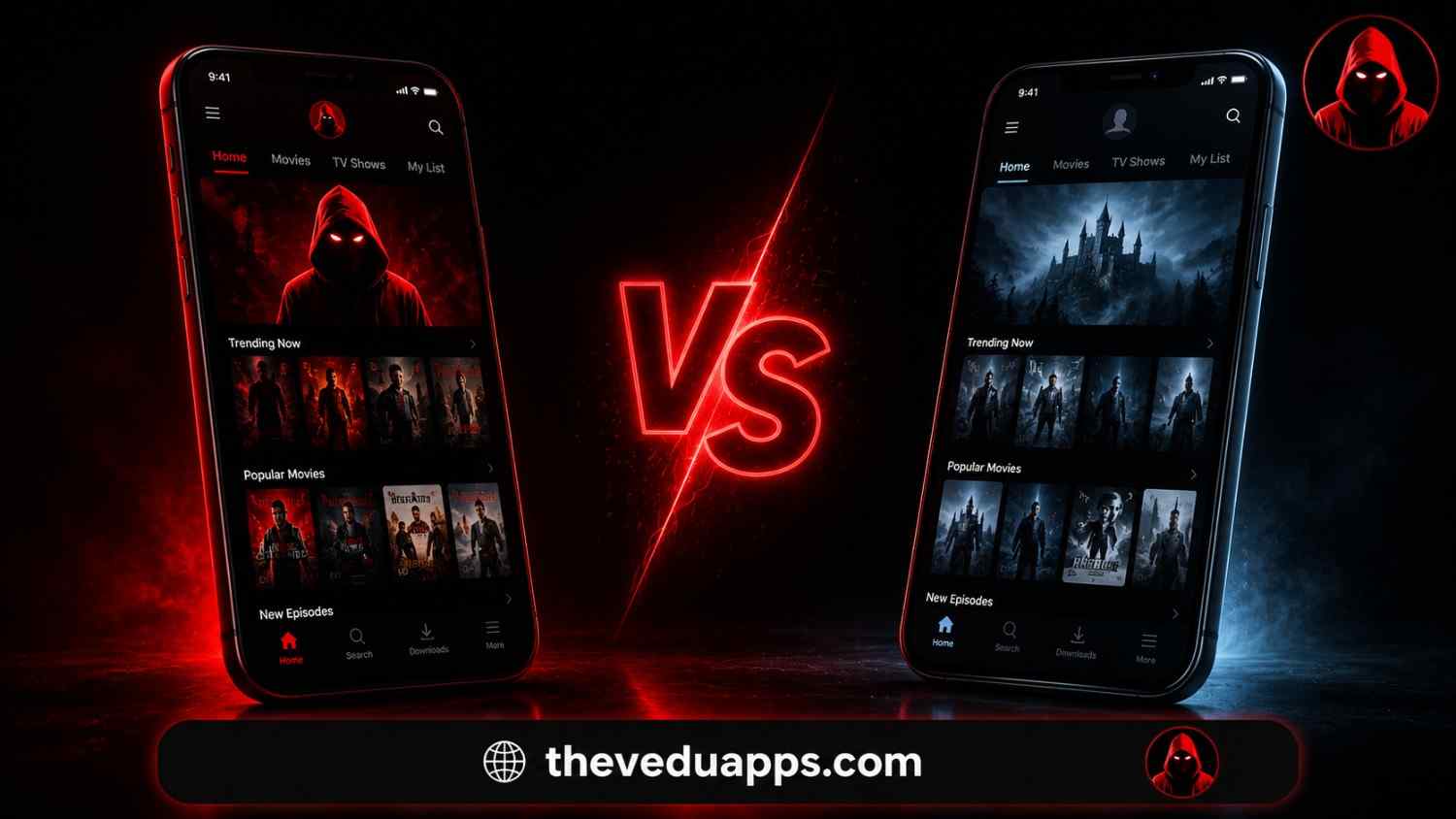
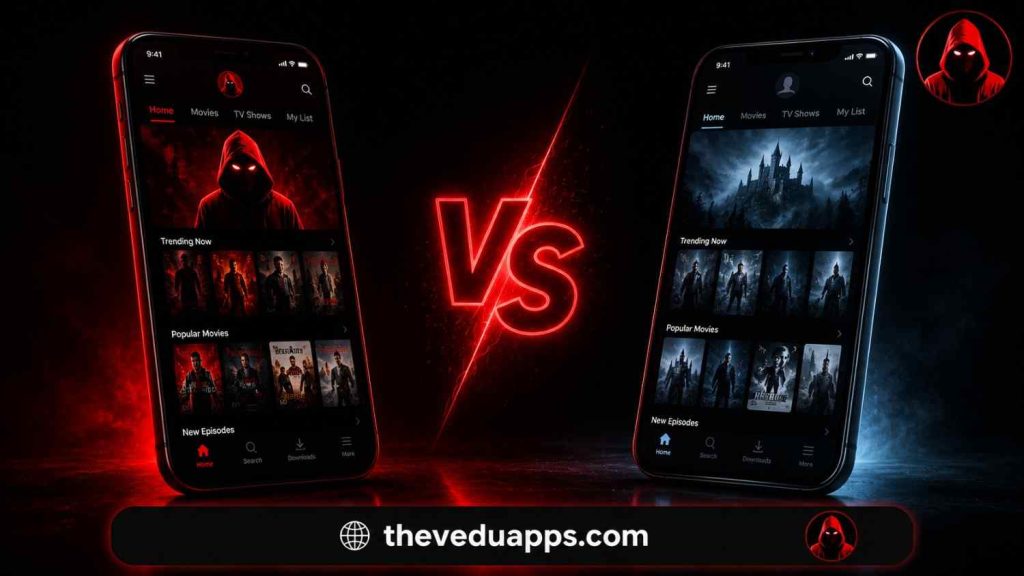
Vedu APK vs Castle APK: The Real Truth, Issues, and Risks
Search “free movies,” “HD streaming without subscription,” or “ads-free entertainment” today, and you’ll run into a flood of third-party APKs promising exactly that. Two names come up constantly: Vedu APK vs Castle APK. Both claim to be a “free alternative” to Netflix, Prime Video, and other paid platforms. But once you look past the marketing and examine these apps from a technical and legal standpoint, the picture isn’t nearly as bright as it’s made to sound.
This article doesn’t promote either app. Instead, it lays out what their own marketing rarely tells you.
What Vedu APK and Castle APK Actually Are?
Neither app is available on the Google Play Store. Both are distributed only as APK files from third-party websites, which means:
- Google’s Play Protect security scanning never touches them
- There’s no verified, accountable developer identity behind them
- Updates, bug fixes, and support depend entirely on the developer’s discretion, not any enforced standard
Neither app hosts content itself both aggregate links from third-party servers and present them in a single interface. This is the same model used by earlier apps like Showbox, Terrarium TV, and Pikashow, several of which have since been shut down or blacklisted over copyright or security concerns.
The Real Issues With Vedu APK
1. Copyright and licensing problems Vedu openly offers movies, dramas, and web series “100% free” without the licensing deals that legitimate streaming platforms (Netflix, Hotstar, etc.) are legally required to have. That means the content comes from unauthorized sources, which falls under copyright infringement in most jurisdictions.
2. Adult content with no age verification Vedu’s own marketing material openly mentions “adult content” being available, but there’s no mention anywhere of an age-gate or parental verification system. This is a serious red flag, especially for households where children also use the phone.
3. “100% safe” claims are self-certified The app’s website makes claims like “McAfee verified,” but these come from the platform itself there’s no link to an independent, third-party audit report. Until a neutral security firm verifies this publicly, such claims should be treated as marketing, not a guarantee.
4. Permissions and data privacy Third-party APKs often request more permissions than necessary (storage, network, sometimes location) without a clear privacy policy explaining where that data goes. Since the app isn’t governed by any official store’s policy, there’s no external oversight of its data-handling practices.
The Real Issues With Castle APK
1. The same copyright/piracy model Castle APK works the same way as Vedu offering movies, sports, live TV, and web series “free” without official licensing. Legally, it sits in the exact same risk zone.
2. Inappropriate links – admitted by its own review sources Sites promoting Castle itself acknowledge that “annoying links sometimes take you to inappropriate videos” and that being a third-party app makes it risky, with no dedicated support team. This isn’t an outside accusation it’s confirmed by sources connected to the app itself.
3. No auto-update system In several versions, Castle has to be updated manually. A manual update process for a third-party APK is itself a risk, since users end up stuck on old, vulnerable versions, or download fake “update” files that turn out to be malware disguised as the real app.
4. Legal risk varies by region Multiple reviews confirm that content availability and legality differ from region to region meaning usage could be riskier in some countries than others, but no location can be called “fully legal.”
Which One Is Slightly Less Risky?
Claiming either app is “completely safe” would be inaccurate both share the same fundamental risk category due to their core model (unauthorized content streaming distributed via third-party APKs). But comparing the available information:
| Factor | Vedu APK | Castle APK |
| Copyright/piracy risk | Present | Present |
| Adult content without age-gate | Openly mentioned | Not directly mentioned, but has reported “inappropriate link” issues |
| Auto-update | Claimed by some sources | Manual updates in several versions |
| Third-party security claims | Self-certified (“McAfee verified” with no independent proof) | No clear security claim found |
| Parental control mention | Not mentioned | Some sources mention a parental control option |
Based on this, Castle APK appears marginally less alarming, mainly because it doesn’t openly offer adult content and some sources mention a parental control option but the “inappropriate link redirects” issue, acknowledged in its own reviews, keeps it from being fully trustworthy either. Both apps carry the same fundamental risk of being unregulated third-party APKs.
What’s a Safer Path?
If the goal is simply affordable streaming, these options are considerably safer:
- Licensed free-with-ads platforms like YouTube (official uploads), Tubi, or region-specific legal AVOD apps
- Affordable regional subscriptions from local OTT platforms, where both the data practices and content are legal
- Bundle deals that many telecom providers offer alongside streaming subscriptions, reducing cost without the piracy risk
Bottom Line
Vedu APK and Castle APK both promise “free entertainment,” but that promise comes at the cost of copyright infringement, unverified security claims, and in Vedu’s case adult content accessible without any age verification. Before using any third-party APK outside the Play Store, understanding these risks matters. The short-term benefit of “free” often turns out to be far more expensive in terms of long-term data privacy and legal exposure.